The automotive industry is undergoing rapid changes driven by technological innovation, sustainability demands, and consumer preferences. By 2025, trends are expected to transform the sector, affecting not only how vehicles are designed and manufactured but also how consumers interact with them in terms of marketing and usage.
That’s why we want to share with you the key trends shaping the future of this industry, along with updated and useful data to help you make decisions for the upcoming year.
Vehicle Electrification
One of the most prominent trends in the automotive industry is the shift towards electric vehicles (EVs). Governments around the world are implementing regulations to reduce carbon emissions, accelerating the development and adoption of electric vehicles. Global electric vehicle sales are projected to reach 26 million units by 2030, accounting for 28% of all new vehicle sales.
For this reason, automakers are heavily investing in electrification. General Motors, for instance, has announced that it will allocate more than $35 billion by 2025 towards electric and autonomous vehicles.
But does electrification work in today’s world? It’s expected that the installation of electric vehicle charging stations will grow at an annual rate of 24% until 2025, according to the International Energy Agency (IEA).
The increasing availability of more affordable and longer-range electric models, along with the development of charging infrastructure, indicates that electrification will be a dominant trend in the coming years. As a result, your business should keep an eye on this line of vehicles, which already includes heavy-duty trucks, public transportation, and more.
Autonomous Driving
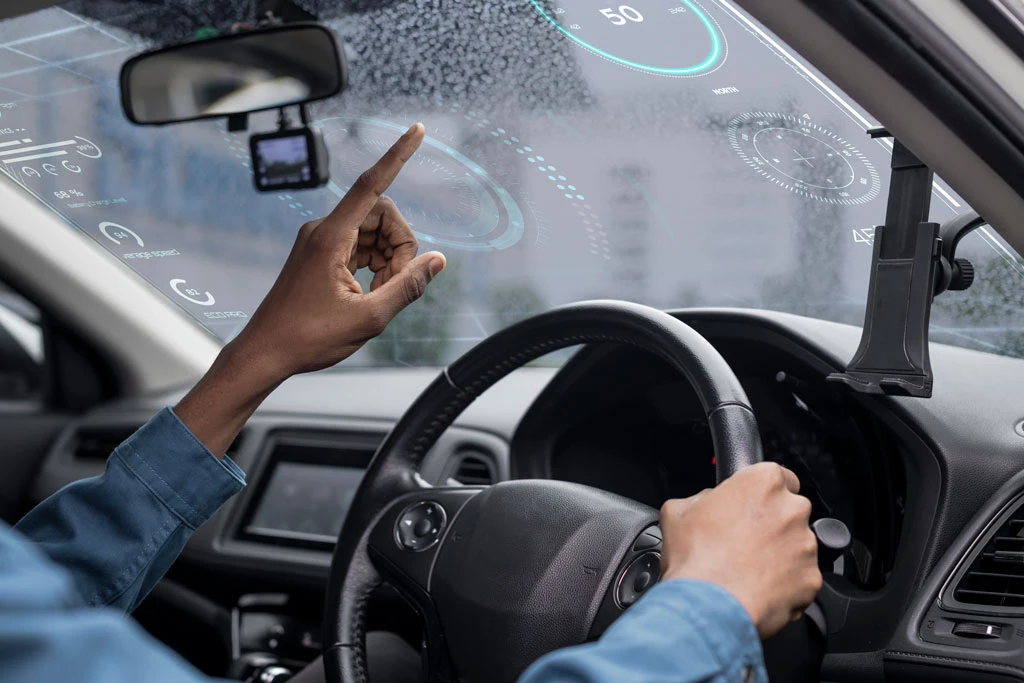
Autonomous vehicles, though still in development and testing phases, are poised to be one of the most disruptive revolutions in the automotive industry. This technology is expected to advance rapidly with the integration of artificial intelligence (AI), advanced sensors, and 5G connectivity.
It’s estimated that 13% of vehicles on the road by 2025 will be equipped with advanced driver-assistance features, known as Level 3 autonomy, and this technology could generate global economic value between $1.5 and $2 trillion annually by 2030.
However, despite progress, public acceptance and government regulation remain significant barriers. That’s why automotive and tech companies must collaborate to improve safety and viability, making significant strides like Tesla, which recently launched its own autonomous taxi line at the We Robot 2024 conference.
Shared Mobility
The concept of shared mobility, which includes services like carsharing, ridesharing, and on-demand vehicles, has gained popularity in cities and will continue to be a major trend through 2025.
The number of users of shared mobility services is expected to reach 500 million globally by 2025. This trend has the potential to reduce the number of vehicles on the roads, alleviating congestion and emissions.
This could reduce the number of vehicles in cities by up to 10% by 2030, continuing to be a solution to mitigate congestion and improve urban sustainability.
If you own a car business, this might not sound like great news, but if you anticipate it, you can start looking for innovative solutions to ensure customers choose you over the competition.
AI-Powered Automotive Agents
As the way we use cars changes, so does the way we buy them. By 2025 (and even now), companies in the sector will be able to hire AI-powered sales agents with personality to engage with your customers.
These agents are available 24/7. They prospect, provide information, resolve customer inquiries, understand contexts, and are the perfect combination of technology and empathy.
Additionally, these AI agents integrate with your entire digital ecosystem and, of course, with your human team, freeing up their time and making them 40% more efficient while boosting your business to sell up to three times more through conversational channels.
Connectivity and Smart Vehicles
Connectivity is another crucial component in the transformation of mobility. Connected vehicles equipped with Internet of Things (IoT) technologies will offer drivers a smoother and more personalized experience while enhancing road safety.
By 2025, it’s expected that more than 75% of all vehicles sold worldwide will be connected to the internet, enabling remote software updates and real-time data exchange. Furthermore, with the implementation of 5G networks, vehicles will be able to communicate with each other (V2V) and with infrastructure (V2X), significantly improving traffic safety and efficiency.
This will also kick off a cultural movement, where being in a car could become a leisure space. It’s predicted that global revenues from in-vehicle entertainment in connected cars will reach $60 billion next year.
Conclusion
In 2025, the automotive industry will be defined by these trends, which will not only reshape the design and function of vehicles but also have a significant impact on how people interact with mobility.
As these innovations continue to evolve, opportunities to improve efficiency, safety, and user experience will grow exponentially, and we hope it will also remain sustainable.